Access control
Event access control with QR codes
Access control decides, at every door and in every zone, who gets in, how many times and how long it takes. PASE handles it with a unique QR code per person, scanned with a phone: it validates instantly, blocks a repeated code even if two scanners read it at the same moment, answers "not authorized" if someone tries to enter a zone they are not allowed in, and shows live how many people are in. It is booked per event and quoted: Base from USD 600, Pro from USD 1,500, Enterprise on quote.
What access control has to solve
A door has four jobs, and a paper list or a hand stamp only covers one of them:
- Who can get in. That the person arriving is invited or accredited, and that it is really them and not someone who knows the name.
- Where they can go. General admission, VIP, backstage, press, speakers' room: each zone with its own permission.
- How many times. A single entry, free re-entry or a maximum number of scans.
- How many people are inside. For capacity, for the client and for the next event.
The Public Venue Credentialing Guide from CISA, the US Cybersecurity and Infrastructure Security Agency, puts it this way: written access criteria for each controlled area, backing the decision to approve or deny. A QR system turns those criteria into an on screen answer, the same for every operator.
How it works in PASE
- You upload the list or share a registration link per category (guests, press, staff, sponsors). Anyone who signs up through the press link is registered as press, with no way to pick anything else.
- Each person gets their unique QR code by email, with the badge as a PDF. Registration and the email come out in Spanish or English.
- At the door, any phone or tablet with a camera is a scanner. No app to install and no equipment to buy; if the production already has scanners, they work too.
- The screen answers green or red with the name and the access type. From the same scanner, staff can search by name for anyone who arrives without the email.
- The dashboard shows check-ins live by type, by zone, by door and by hour.
Double entry: the most common problem
The most common fraud at a door is not sophisticated: it is a screenshot of the QR code forwarded to a group chat, or the same pass used at two different doors. In PASE the marking is atomic: even if two scanners read the same code at the same instant, only one person gets in and the other scan is logged as a duplicate. All checkpoints are in sync, so whoever came in through the north entrance already shows as checked in at the south one.
To count properly at the end, the report separates the people who got in from the total of valid, duplicate and rejected scans. In the Mar del Plata Festival case below, the door stopped 60 attempts with a repeated or unauthorized QR code.
Zones, re-entry and permissions
Each access type has its enabled zones in a permissions matrix. If someone scans at a point they are not allowed in, the answer is "not authorized", without security having to memorize wristband colors.
Re-entry is handled in two ways: with a pass type that allows coming back in, or with a checkpoint in validation mode, which checks the permission without using up the code or adding to the count again (useful for backstage or a VIP area people go in and out of all night). If the pass has a maximum number of scans, that is the limit for the whole event. More detail in access control for VIP, backstage and rooms.
An honest clarification: the door checks the pass type and the zone, not the day or the time. At a multi-day event, if a pass is only valid for Saturday, it is set up with one zone per day.
How many access points you need
It depends on how many people arrive at once, not on the total. At the events that ran on PASE between September and October 2026, one operator with QR codes checked in one person every 6 to 16 seconds, and at events with a set start time almost half of the day's attendees came in during the busiest half hour (details in how long event check-in really takes: real data). The HSE, the UK Health and Safety Executive, recommends staggering arrivals when the number of people may exceed the venue's capacity, and having a way to measure how many people are arriving.
To run the numbers for your event, use the check-in points calculator: enter attendees and how they arrive, and it tells you how many access points and operators you need.
Capacity and alerts
If you enter the venue capacity, PASE sends an email alert at 80% and at 100%. The 80% one is the useful one, because you can still hold the entry. With a peak threshold, it also alerts you when more people than expected come in within a 10 minute window. At the end you get the report with real attendance, peak arrival times and entry times, shareable by link with no personal data, plus the attendee list as a CSV.
What PASE does not do
- It does not sell tickets. Ticket sales to the public are done by ENTRÁ, the ticketing platform from the same team.
- It does not work without internet. Every checkpoint needs a connection to sync in real time. At open air venues, plan for a network or backup mobile data (see internet down at the event door: what to do).
- It does not use facial recognition or biometrics. Identity is checked with the QR code, the name on screen and, if needed, an ID document.
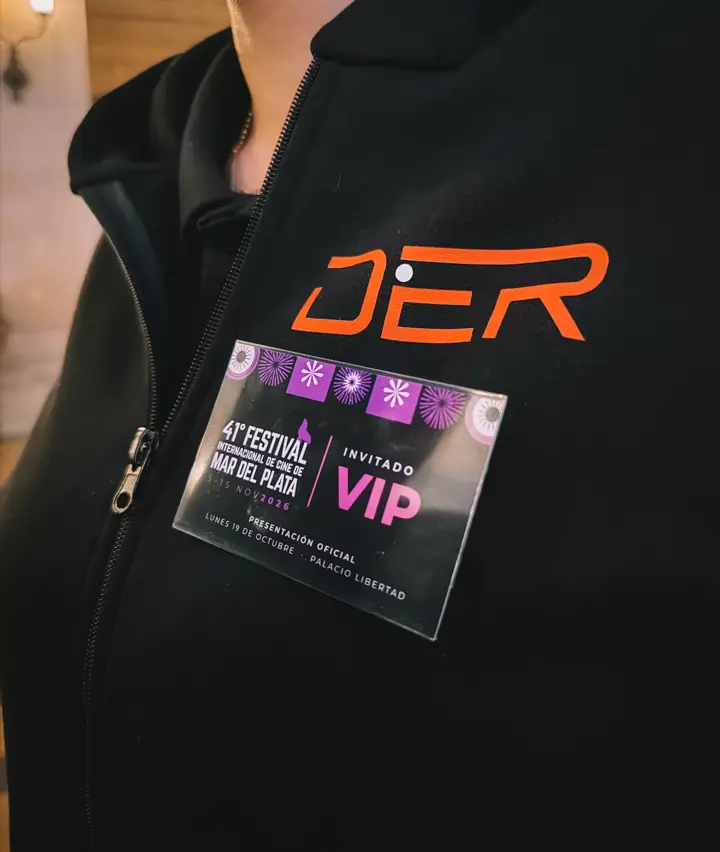
Real case with PASE
Launch of the 41st Mar del Plata International Film Festival
Palacio Libertad, Buenos Aires, October 19, 2026. The guest list, the passes sent by email and door control all ran on PASE.
- 16,000+records in the event database
- 588check-ins validated at 2 access points
- 60attempts stopped at the door (repeated QR or not authorized)
By type of event
- Congresses and trade fairs: morning peaks, speakers, sponsors and exhibitors.
- Corporate events: closed list, company and job title.
- Nightclubs and parties: guest lists, re-entry and right of admission.
- Festivals and concerts: zones, press, staff and artists.
How much it costs
Each event is quoted, and every plan includes setup and testing beforehand. Base, from USD 600: up to 500 attendees and one access point. Pro, from USD 1,500: 500 to 2,000 attendees, up to 4 scanning points, on site support, 2 operators and badge printing. Enterprise, on quote: unlimited access points, a dedicated team and integrations. Full details on the pricing page.
Frequently asked questions
What is event access control?
It is the system that decides at every door who gets in, to which zone and how many times, and that counts how many people are inside. With PASE each person has a unique QR code that is validated with a phone, double entry is blocked and the dashboard shows check-ins live.
Do I need to buy scanners or install an app?
No. Any phone or tablet with a camera works as a scanner, from the browser. If the production already has scanners, those can be used too.
How does PASE stop someone who forwards a screenshot of the QR code?
Each QR code is marked as used on the first scan, and the marking is atomic: even if two scanners read it at the same time, only one person gets in and the other scan is logged as a duplicate. All doors are in sync.
Does it work without internet?
No. Every checkpoint needs a connection to sync in real time. At open air venues, plan for a stable network or backup mobile data.
Does PASE sell tickets?
No. PASE does accreditation and access control. Ticket sales are handled by ENTRÁ, the SOMOS DER ticketing platform, at www.entratickets.com.
Put your event's door on PASE
A unique QR code, double entry blocked, zones and a live report. Quoted per event: Base from USD 600, Pro from USD 1,500, Enterprise on quote.
Get a quote on WhatsApp See the demoWant to see the plans first? PASE pricing
Keep reading
Event accreditation software in Argentina: 2026 comparison → Calculator: how many check-in points and operators you need → How long event check-in really takes: real data → Access control for VIP, backstage and rooms → QR codes vs wristbands vs paper lists at the door → Handheld scanner or phone camera for QR check-in → Venue capacity limits in Argentina and the door → Event accreditation in Buenos Aires →PASE is made by SOMOS DER and handles accreditation and the door. Ticket sales to the public are done by ENTRÁ, the ticketing platform from the same team. And staff for accreditation, access control and production can be found on LABURO. This page is also available in Spanish.